A properly built shower needs a reliable waterproofing system, a correctly connected drain and a successful water test before tile is installed. Tuscany Builders prefers traditional hot-mop shower pans, installed by a specialty subcontractor, and coordinates the required construction and inspection process before the finished shower conceals the work.
The Most Important Part of Your Shower Is the Part You Never See
When homeowners plan a bathroom remodel, most of their attention goes toward the tile, vanity, shower glass, fixtures and finishes. Those decisions determine how the bathroom looks.
But the construction beneath those finishes determines whether the shower keeps water where it belongs.
The shower pan is a critical part of that assembly. If it leaks, water can travel beyond the shower, reach the subfloor and framing, and eventually damage rooms that aren't even part of the bathroom.
Dino Presutto has seen the consequences firsthand. On a previous remodeling project, a failed shower pan allowed water to reach the adjoining family-room floor. Mushrooms eventually appeared in the wood flooring.
The homeowners had a finished bathroom, but the construction underneath it had failed.
That is why Tuscany Builders pays particular attention to the shower pan before tile installation begins.
Why Tuscany Builders Prefers Traditional Hot-Mop Shower Pans
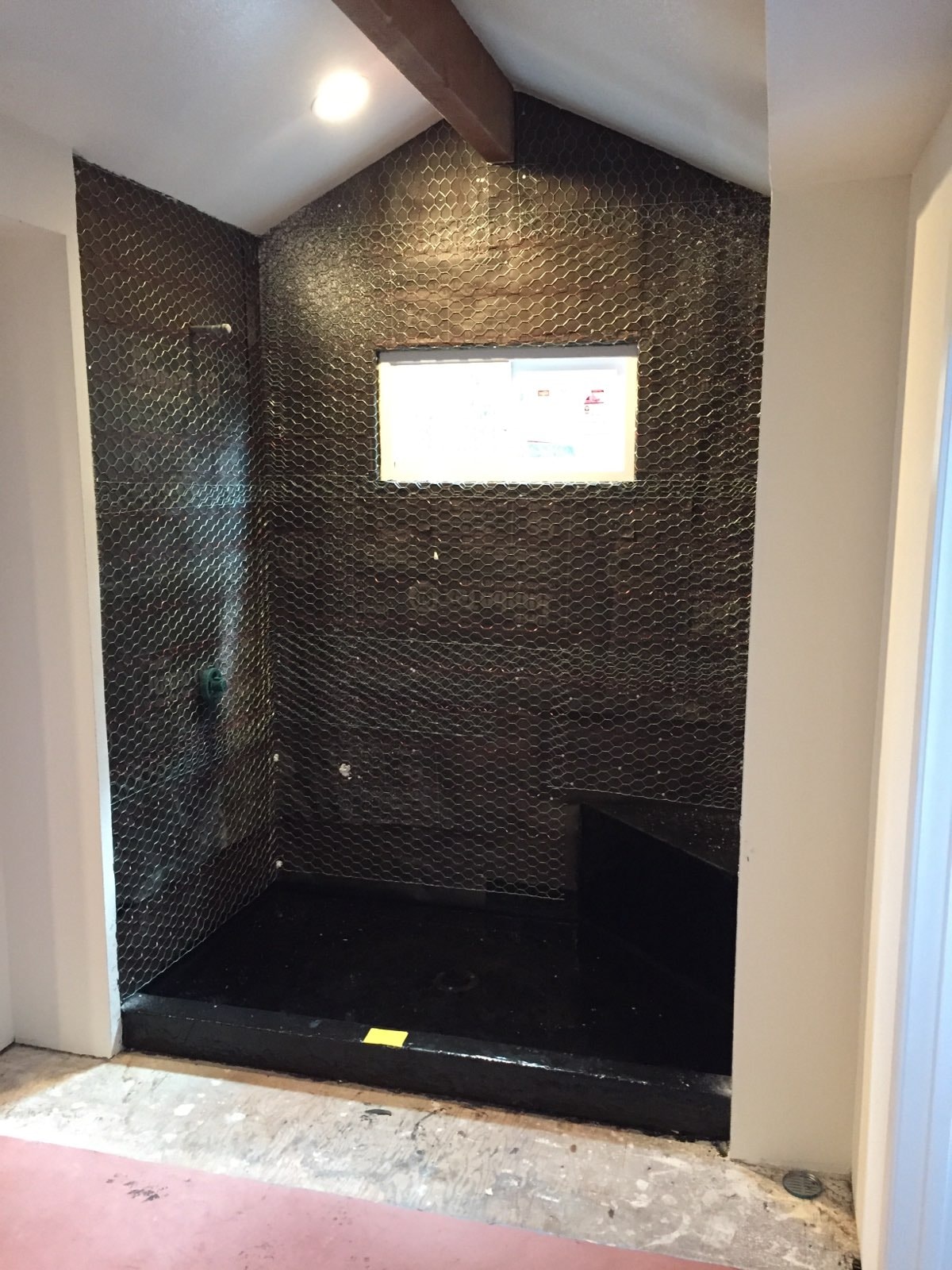
Traditional hot-mop shower pans use layers of asphalt and reinforcing felt to create a waterproof liner beneath the shower's finished surfaces.
Tuscany Builders uses a specialty subcontractor for this work. Hot-mopping is a specialized trade, and Dino does not perform that installation himself. His responsibility is to coordinate the work as part of the overall bathroom construction.
Dino prefers traditional hot-mop construction because he considers it a more effective, dependable foundation for building the shower assembly.
The decision is worth making before construction starts. The cost of properly preparing and waterproofing a shower is small compared with the potential cost of opening a finished bathroom to repair a leak and its resulting damage.
What about liquid-applied waterproofing?
Homeowners may see products such as RedGard used in modern shower construction. These are liquid-applied waterproofing products, not simply paint, and certain products have approved uses in shower assemblies when installed according to their specifications.
The important issue is that different waterproofing systems have different installation requirements. A coating cannot compensate for poor preparation, an incorrect drain connection, inadequate coverage or failure to follow the complete system instructions.
Tuscany Builders' preference is traditional hot-mop construction. We do not treat the choice of waterproofing as an opportunity to cut corners on the part of the bathroom responsible for keeping water out.
What Happens Before the Shower Tile Goes In?
The waterproofing work needs to be completed and verified before it disappears behind the finished materials.
A typical traditional hot-mop shower-pan process involves several coordinated construction steps:
| Stage | What needs to happen |
|---|---|
| Subfloor preparation | Inspect and prepare the substrate for the shower assembly |
| Drain preparation | Confirm the drain and its connection are appropriate for the selected shower-pan system |
| Pre-slope and liner preparation | Prepare the shower base and surrounding details according to the specified assembly |
| Hot-mop installation | Specialty subcontractor installs the asphalt and reinforcing felt layers |
| Curb and corners | Waterproof the transitions and corners as part of the complete assembly |
| Drain integration | Ensure the liner is properly integrated with the drain and drainage components |
| Water test | Fill and test the shower receptor for watertightness |
| Inspection and approval | Complete the applicable building department inspection before covering the work |
| Tile installation | Proceed with the finished shower surfaces after the required work is accepted |
The exact installation sequence depends on the selected system and project details. The shower assembly must be constructed according to its applicable code requirements and installation specifications.
The Water Test Is Not Optional
A shower pan should not be covered with tile simply because it looks finished.
The 2025 California Plumbing Code, Section 408.8.5, requires shower receptors to be tested for watertightness. The test requires water at least 2 inches deep for at least 15 minutes, with the test plug positioned so the liner's connection to the drain is also subjected to the test.
This matters because a leak at the drain connection can be just as damaging as a problem in the liner itself.
The test provides an opportunity to identify a problem while the shower-pan assembly is still accessible.
Tuscany Builders coordinates the applicable testing and inspection process before the finished surfaces conceal the work.
Why Skipping a Bathroom Permit Can Become an Expensive Mistake
Some homeowners are offered a lower price if a bathroom remodel is completed without permits. That may seem like a way to save money, but it removes an important part of the construction oversight process.
Bathroom remodeling can involve plumbing, electrical, ventilation, wall assemblies and other regulated work. The permit requirements depend on the scope of the project and the local building department.
For example, the City of Dana Point states that permits are required for almost all construction, including bathroom and kitchen renovations. Orange County also publishes residential bathroom-remodel requirements for properties within its jurisdiction.
A permit establishes an official process for reviewing and inspecting applicable work. It does not guarantee that every detail is perfect, and it does not replace the contractor's responsibility to build correctly. But skipping the process can leave homeowners without the oversight they expected.
It can also create complications later if work must be exposed, corrected, documented or approved when the property is sold.
Before hiring a bathroom remodeling company, ask who is obtaining the permits, who is scheduling inspections and whether the shower-pan water test will be completed before tile installation.
What a Shower Pan Leak Can Do to Your Home
Water does not always remain where a homeowner can see it.
When a shower pan or its surrounding waterproofing fails, moisture can reach:
- Wall framing and concealed wall cavities.
- Subflooring and floor framing.
- Insulation and other building materials.
- Adjacent rooms and finished flooring.
- Areas behind baseboards and adjoining walls.
Continued moisture can create conditions for mold growth and deterioration of building materials.
The damage may not become apparent immediately. A homeowner may first notice a musty smell, staining, soft flooring or visible growth long after the original leak began.
Mold and moisture problems should be addressed based on the actual affected materials and conditions. Replacing the visible tile without correcting the source of water does not solve the underlying problem.
Questions to Ask Before Hiring a Bathroom Remodeling Company
| Ask the contractor | What you should understand |
|---|---|
| What shower-pan system are you proposing? | Know exactly what is being installed |
| Who performs the hot-mop work? | Identify the specialty subcontractor |
| How is the drain connection waterproofed? | Understand a critical leak-prevention detail |
| Will the shower receptor be water-tested? | Confirm that testing is part of the process |
| Will the required inspection happen before tile? | Make sure work is not concealed prematurely |
| Who obtains the permits? | Establish responsibility for approvals |
| Who coordinates the plumbing, waterproofing and tile trades? | Avoid gaps between separate contractors |
A bathroom proposal should explain the work being performed, not simply list tile, fixtures and labor.
Bathroom Remodeling Is About What You Build Behind the Finish
Tuscany Builders approaches bathroom remodeling as a complete construction project, not a tile-and-fixture replacement.
Dino's experience as a tile contractor informs the decisions made before the finished surfaces go in. Tuscany Builders coordinates the specialty trades, waterproofing, plumbing, tile work, permits and construction sequence so the details beneath the finished bathroom receive the same attention as its appearance.
For homeowners in Laguna Niguel, Dana Point, Mission Viejo, San Juan Capistrano and throughout South Orange County, the shower pan deserves attention before the tile is selected.
The tile is what you see every day. The shower pan is what protects the home every day.
If you're planning a bathroom remodel, start with a conversation about how the bathroom will actually be built.
Tuscany Builders
Luxury Design-Build Remodeling in South Orange County
CA Lic. #822306